Someone drove past a house in their neighborhood — orange-red brick from 1972, nothing wrong with it structurally, just kind of dull and dated — and after the limewash job it looked like a Tuscan farmhouse. Soft, creamy white, the mortar joints still visible, the texture of the brick still there. The change was dramatic without looking fake.
That's the story we hear most often from homeowners who come to us for limewash work. The before-and-after isn't a paint-over. It's a softening. A quieting down of loud or dated brick. And because limewash penetrates the masonry rather than coating it like a film, the result has a depth that regular paint simply can't fake.
Here's what the before-and-after actually looks like in practice, what drives it, how much it costs in the Chicago area, and what you should know before committing.
What Changes — And What Doesn't
This is the part most homeowners don't fully anticipate. Limewash doesn't erase your brick. It translates it.
The texture of the brick face stays completely intact. The variation between individual bricks — one slightly lighter, one slightly more orange — those differences remain, just quieted. What disappears is the raw, assertive color. Burnt orange becomes muted cream. Deep red becomes a soft rose-white. Yellow brick — which is extremely common in Chicago-area homes built through the 1970s and 80s — turns into something that reads almost like aged limestone.
The mortar joints absorb limewash differently than the brick face does, which creates natural variation in the finish. That's not a flaw. It's the whole point. Limewash is supposed to look like it's been on the building for a century.
If you want a truly opaque, solid-white result — the look where you can barely tell the underlying material is brick — that requires more product and a thicker application. Romabio Classico Limewash applied at higher concentration, or their Masonry Flat product, can get you there. The distressed, partially-washed look that still shows significant brick color underneath uses a much more diluted application with some wiping back after it goes on.
Both are legitimate results. The question is which one matches your house and your taste.
Why This Matters Specifically in Chicago
This isn't just an aesthetic decision. In a freeze-thaw climate like ours, the coating you put on brick affects the long-term health of the masonry itself.
Regular acrylic or latex paint forms a film on the brick's surface. It seals moisture in. Chicago brick constantly absorbs and releases moisture — that's just how masonry works. When you lock that moisture inside with a sealed coating, the freeze-thaw cycle does the damage: water expands when it freezes, and over time that pressure causes spalling, where the face of the brick literally flakes or pops off. Efflorescence — those white mineral deposits you see streaking down brick facades — is another symptom of the same problem.
Limewash works differently. It penetrates the masonry and chemically bonds through a process called calcification, becoming part of the substrate rather than sitting on top of it. That means moisture can still pass through naturally. The brick can breathe. No trapped water means no freeze-thaw damage to the coating or the brick beneath it. It also means limewash will never chip or peel the way paint does — because there's no film to chip.
We've written more about how Chicago weather affects exterior finishes in general, but brick is the surface where the stakes are highest. If you're wondering why paint on masonry fails so fast, this is your answer.
The Before-and-After Scenarios We See Most
Orange or red brick ranches (1950s–1975): These are the most common candidates for limewash in the southwest suburbs. Homeowners in La Grange ask us about this constantly — the neighborhood has a lot of 1960s and 70s brick ranches that are solid structurally but feel visually dated. A limewash job on a typical 1,500 sq ft ranch takes two to three days and the result is striking. The house reads as quietly European rather than tract housing. The body color shifts to a soft white or warm cream, and the existing rooflines, shutters, and landscaping suddenly look more intentional.
Yellow brick two-stories (1975–1990): Yellow brick is trickier to limewash because the underlying color can push through the finish as a green-gold cast if the mix isn't thick enough. We typically use a more concentrated application and may do two coats to get the warm white result that photographs well and reads well from the street.
Red brick Colonials and Tudors (North Shore): These homes often have more architectural detail — brick arching over windows, ornamental brickwork around entries — and limewash does something interesting with that detail. It highlights it. The dimensional depth of arched brick becomes more pronounced under a soft limewash because the shadows become more readable against the lighter surface.
Interior fireplace brick: Limewash works indoors too. A fireplace that's been limewashed typically goes from feeling like a dated 1980s feature to something that looks like it belongs in a renovated brownstone. One coat at medium dilution usually does it. It's also heat-resistant, so there's no concern about applying it near the firebox.
What It Costs in the Chicago Area
This is where we try to be more specific than the national averages floating around online, which aren't particularly useful.
For exterior brick work in the Chicago suburbs, here's how we break it down:
| Project Type | Typical Range | Notes |
|---|---|---|
| Small brick ranch (900–1,200 sq ft of brick) | $2,800–$4,500 | Single story, good brick condition |
| Larger brick ranch or split-level (1,200–1,800 sq ft) | $4,200–$6,500 | May need two coats for yellow brick |
| Two-story colonial or Tudor (1,800–2,500+ sq ft) | $6,500–$10,000+ | Ladder work, architectural detail add time |
| Interior fireplace (single surround) | $600–$1,200 | Depends on size and prep needed |
| Interior accent wall (brick or drywall) | $800–$2,000 | Includes prep and Romabio Velatura or Classico |
A few things drive the variance: brick condition (spalling or heavy efflorescence needs addressing before limewash goes on), the number of coats required to hit the desired coverage level, and access — a two-story home with dormers or a lot of gable detail takes more time to mask and work around.
DIY material cost is low. A 5-gallon bucket of Romabio Classico Limewash runs roughly $180–$220 and covers around 500–700 sq ft at medium dilution. So a small ranch might need three or four buckets. The cost you're really paying a professional for is the prep, the technique, and the fact that a blotchy limewash job is very hard to fix once the product has cured. For a side-by-side breakdown of what limewash costs compared to painting brick, we've published real Chicago project numbers separately.
The Product We Use — And Why
We use Romabio Classico Limewash for almost all of our exterior limewash projects. Z&Z Painting is a Romabio Preferred PRO applicator, which means we've been trained specifically on their application techniques and have access to their technical support.
Romabio makes three products worth knowing about:
Classico Limewash
The authentic slaked-lime product. It's made from Dolomite lime originating in northern Italy, has zero VOCs, and achieves the traditional aged patina that's defined the look people pin and save. It ages well in freeze-thaw climates — weathering actually adds to the character over time rather than degrading it.
Masonry Flat
What we recommend when a homeowner wants a more opaque, solid result. It's still mineral-based and breathable, still bonds into the substrate, but delivers denser coverage with a 20-year warranty. If someone says "I don't want to see any brick color coming through at all," that's the product.
Velatura Mineralwash
Romabio's interior wall product — it works on drywall in addition to masonry, and creates a soft, layered depth that's different from the exterior look but equally compelling for accent walls and fireplaces.
For color: Romabio's standard line runs whites, warm creams, soft grays, and earth tones. Most of our clients go with Bianco White or Avorio White for a clean, warm result. Custom tints are possible if you need to hit a specific palette, though natural mineral pigments narrow the range considerably compared to conventional paint — you're working in a world of soft, natural tones, not bold colors.
If you want to see what our finished projects look like before committing, our professional limewash and mineral coating work gallery covers several local homes across different brick types and coverage levels.
What Happens Over Time — The Honest Version
Limewash isn't a set-it-and-forget-it finish. It's a living surface. Here's what to expect:
For the first few years, it looks exactly like it did when freshly applied. As weathering sets in — particularly on south and west exposures that take the most sun and rain — the finish will begin to develop a patina. In most cases this looks better, not worse. It becomes more aged, more European-looking, more like the inspiration photos people bring us.
If a specific area gets more wear than you like — say, a section near a downspout or the north face of the house where algae can grow — a partial touch-up is straightforward. You're not repainting the entire house; you're brushing on a bit more product in a targeted area.
For exterior applications in Chicago's climate, plan for a refresh every 5–7 years if you want to maintain the coverage level. That doesn't mean stripping it. You're adding to an existing base, which means the second application typically costs less than the first because the prep is lighter.
If you change your mind entirely and want to go back to bare brick or a different finish, limewash can be removed with acid washing or pressure washing — though it takes professional effort and isn't as simple as stripping paint.
Should You DIY or Hire a Pro?
This is a project where the margin for error is higher than people expect. The product is forgiving in some ways — you can thin it, add to it, wipe it back while wet — but once it cures, your options narrow significantly. Grout lines that absorb too much product and create a striped effect, application that goes on unevenly and dries with hard edges, coverage that's too thin in some areas and too opaque in others: those mistakes are difficult to reverse.
When DIY Makes Sense
If you have a single-story home with good brick in accessible condition and you're comfortable doing thorough prep and working methodically in sections, a DIY exterior limewash is achievable. Budget about $300–$600 in materials for a typical ranch, plus a full weekend. Our step-by-step guide to limewashing brick exteriors in Chicago walks through the prep, mixing, and application process in detail.
When to Hire a Pro
If you have a two-story home, architectural detail work, yellow brick that needs careful concentration management, or any significant prep issues (efflorescence, spalling, mortar gaps), hire it out. The difference in outcome is significant, and the risk of a costly mistake is real.
If you're also doing interior work at the same time, it's worth reading about what to expect on project day so nothing catches you off guard.
One Thing Realtors and Inspectors Should Know
Limewash is a breathable, mineral-based finish that does not seal brick or trap moisture — a key distinction from elastomeric paint or standard acrylic coatings. Home inspectors occasionally flag painted brick as a potential maintenance concern because sealed coatings can accelerate spalling over time. Limewash doesn't carry that concern. It's the same class of finish used on historic European masonry for centuries precisely because it preserves the underlying substrate.
For resale, a well-done limewash job on dated orange or yellow brick regularly generates strong buyer response. The visual update is significant, the cost relative to replacement is minimal, and the finish carries no disclosure concerns regarding moisture management.
Real Before-and-After Results
Here's what the transformation actually looks like on real Chicago-area homes — not renderings, not stock photos.
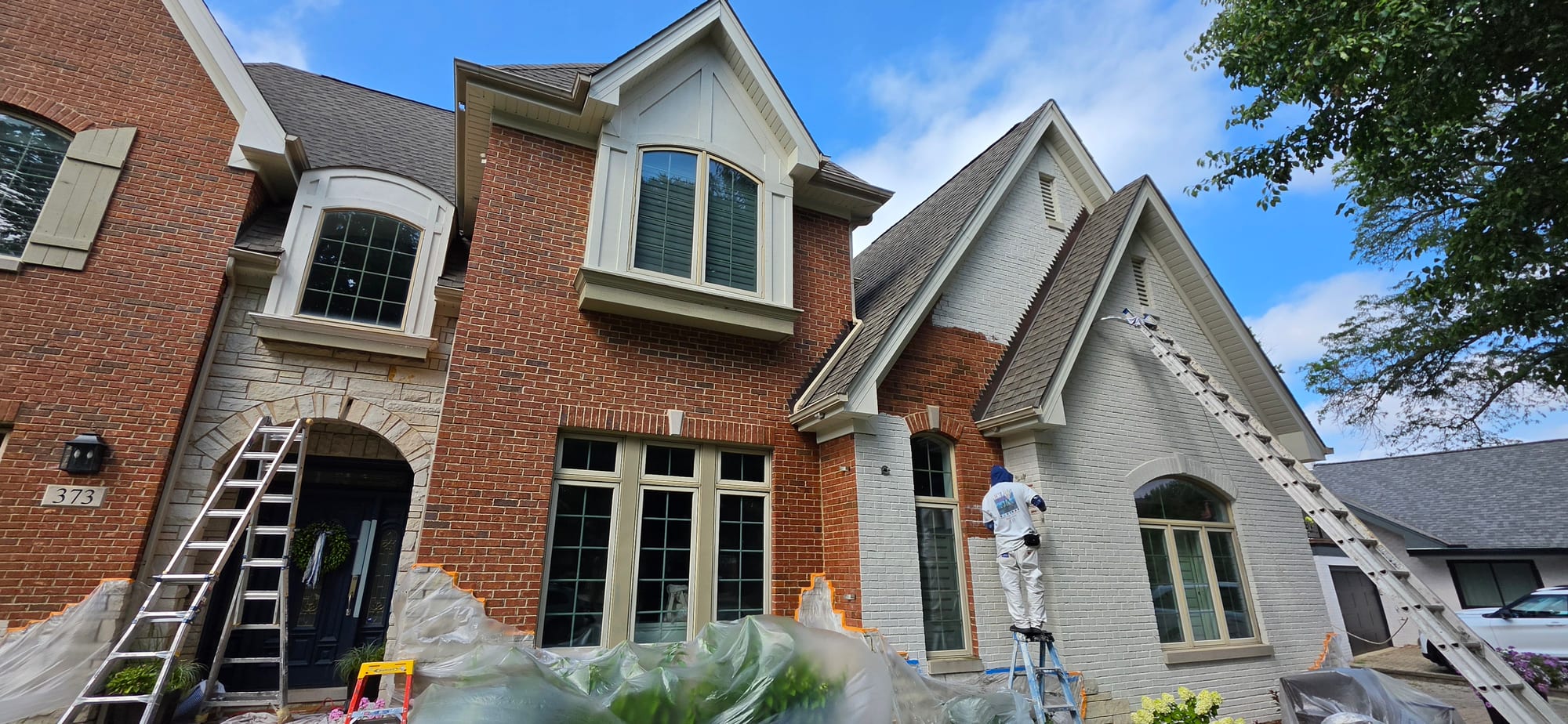
One coat in progress — this shot catches the same wall in both states at once: original red brick on one side, finished limewash on the other.
Classico Limewash, Brick Exterior
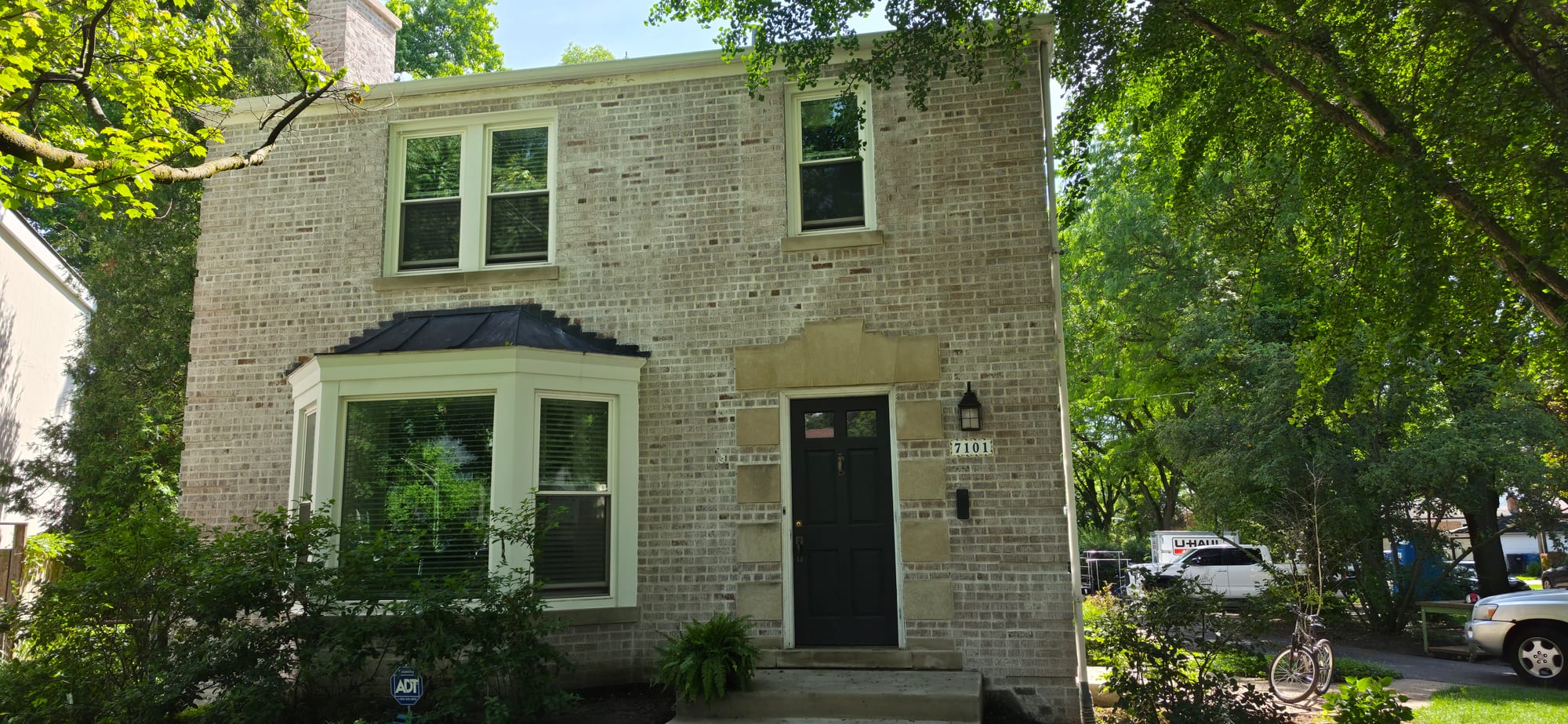
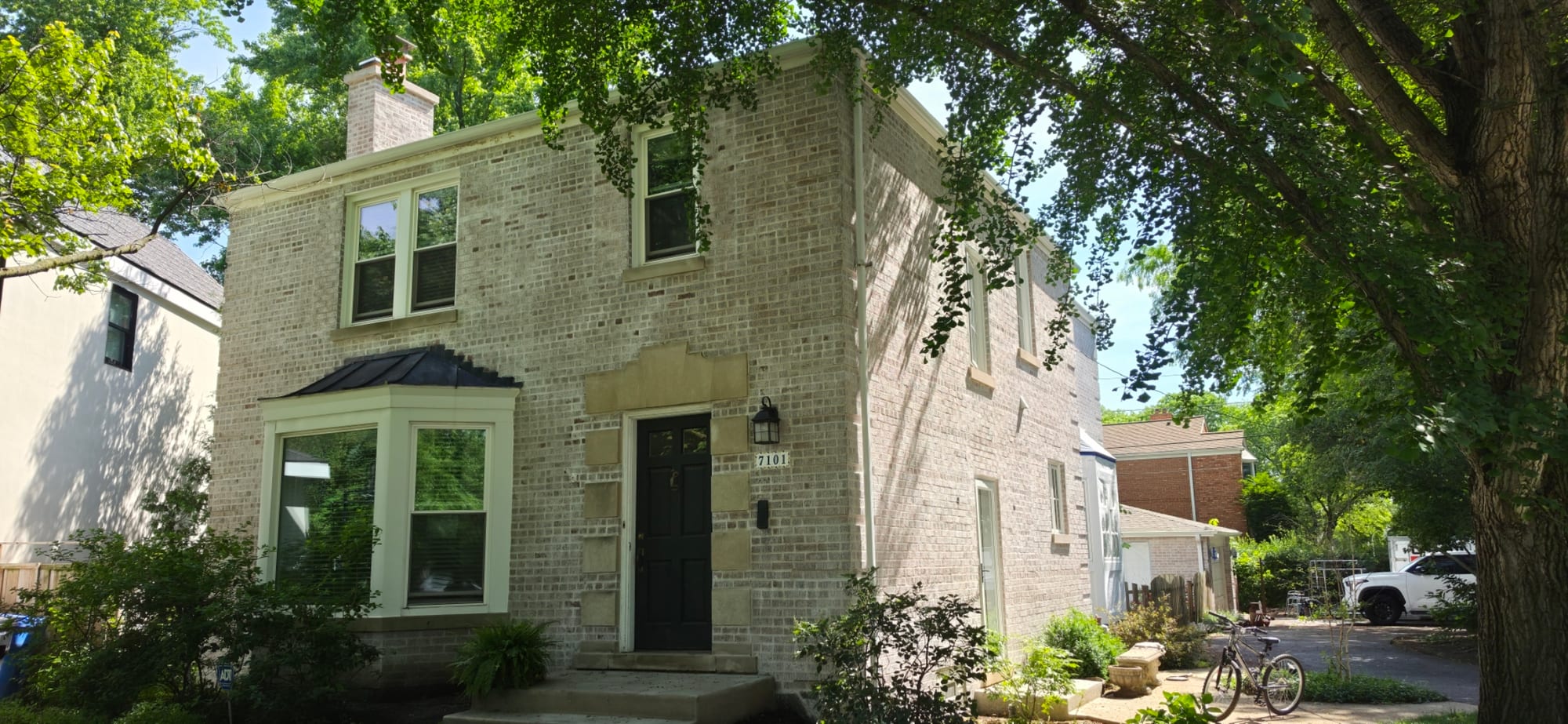
Before and after on the same home — the brick texture and mortar lines carry through, just quieted to a soft cream.
Masonry Flat, Brick Exterior
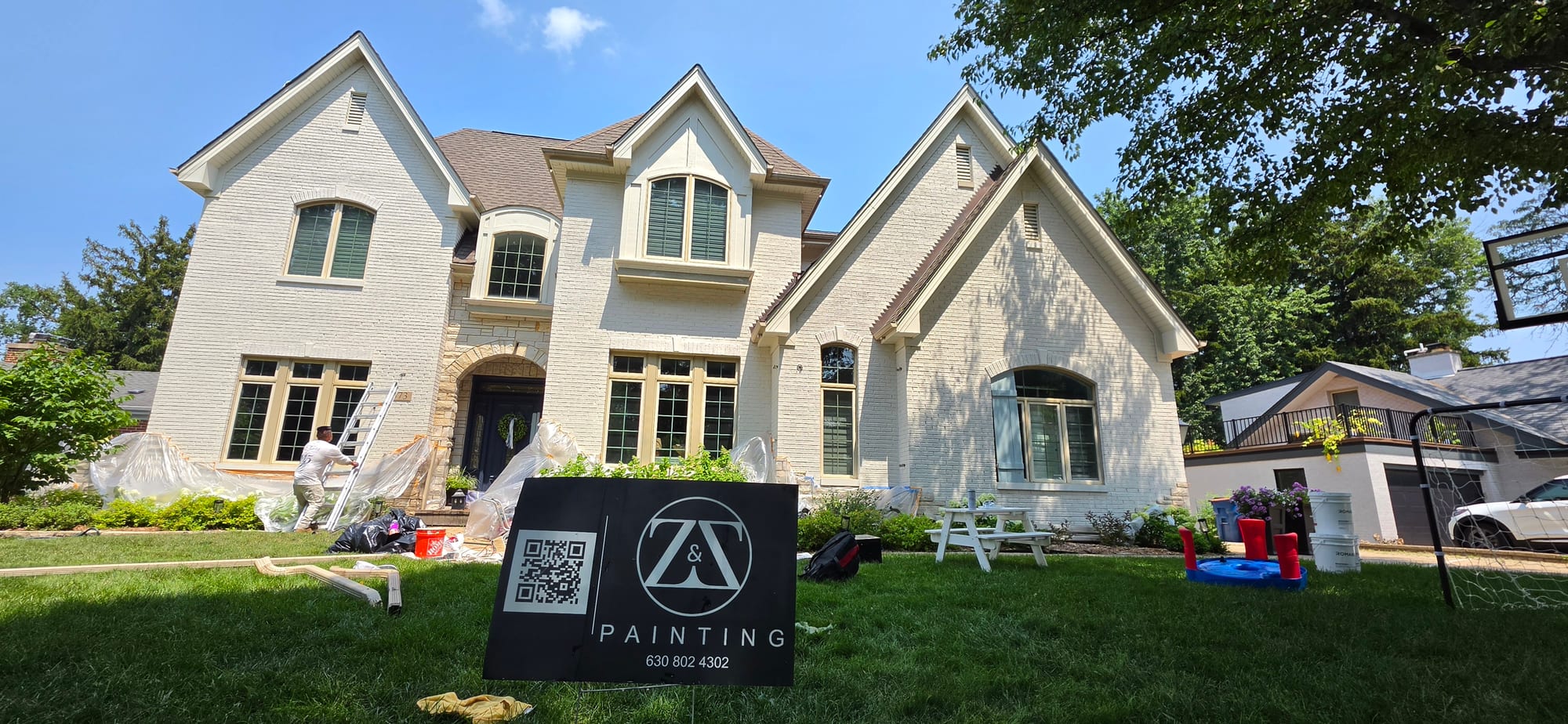
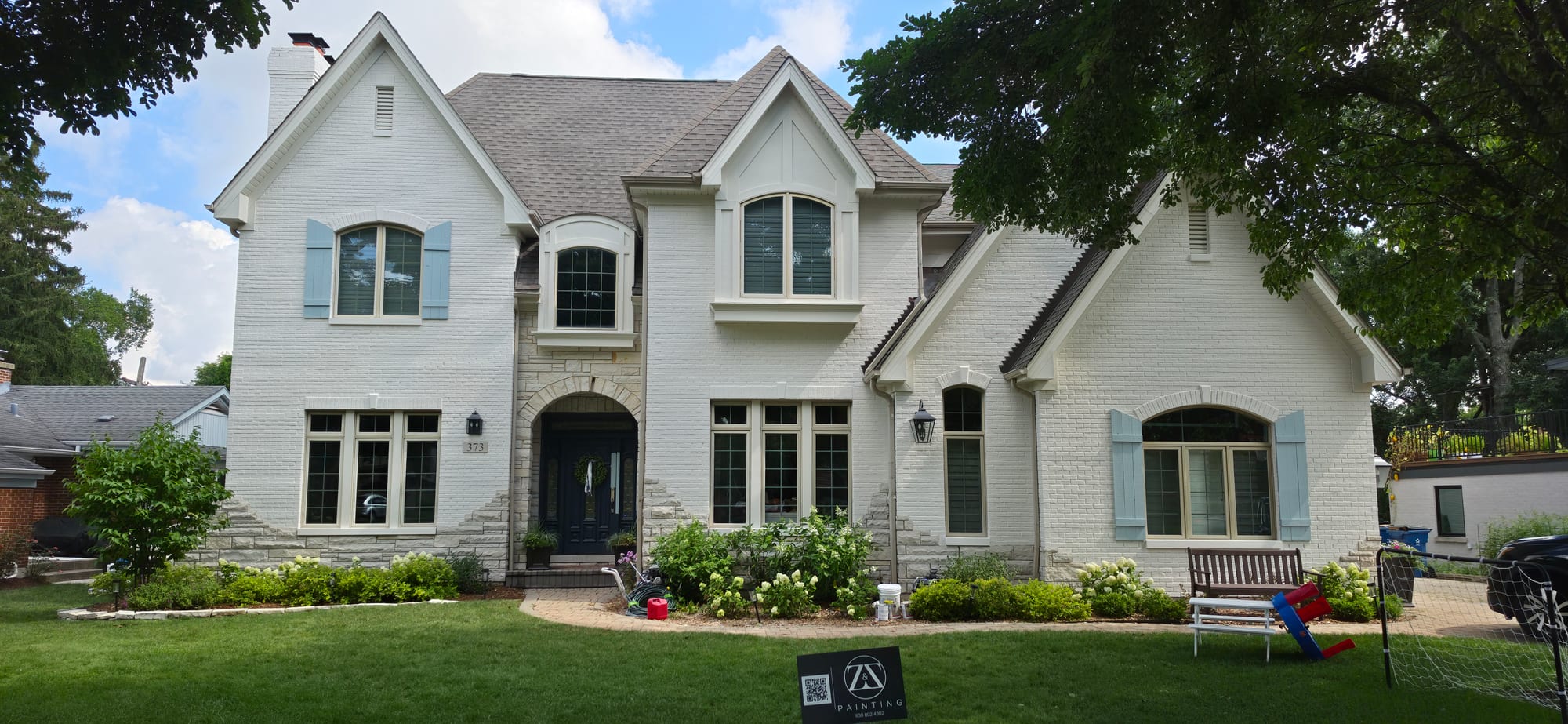
Masonry Flat delivers the more opaque, fully-covered look — this home went from red brick to a clean white finish.
Lime Slurry, Stone Exterior
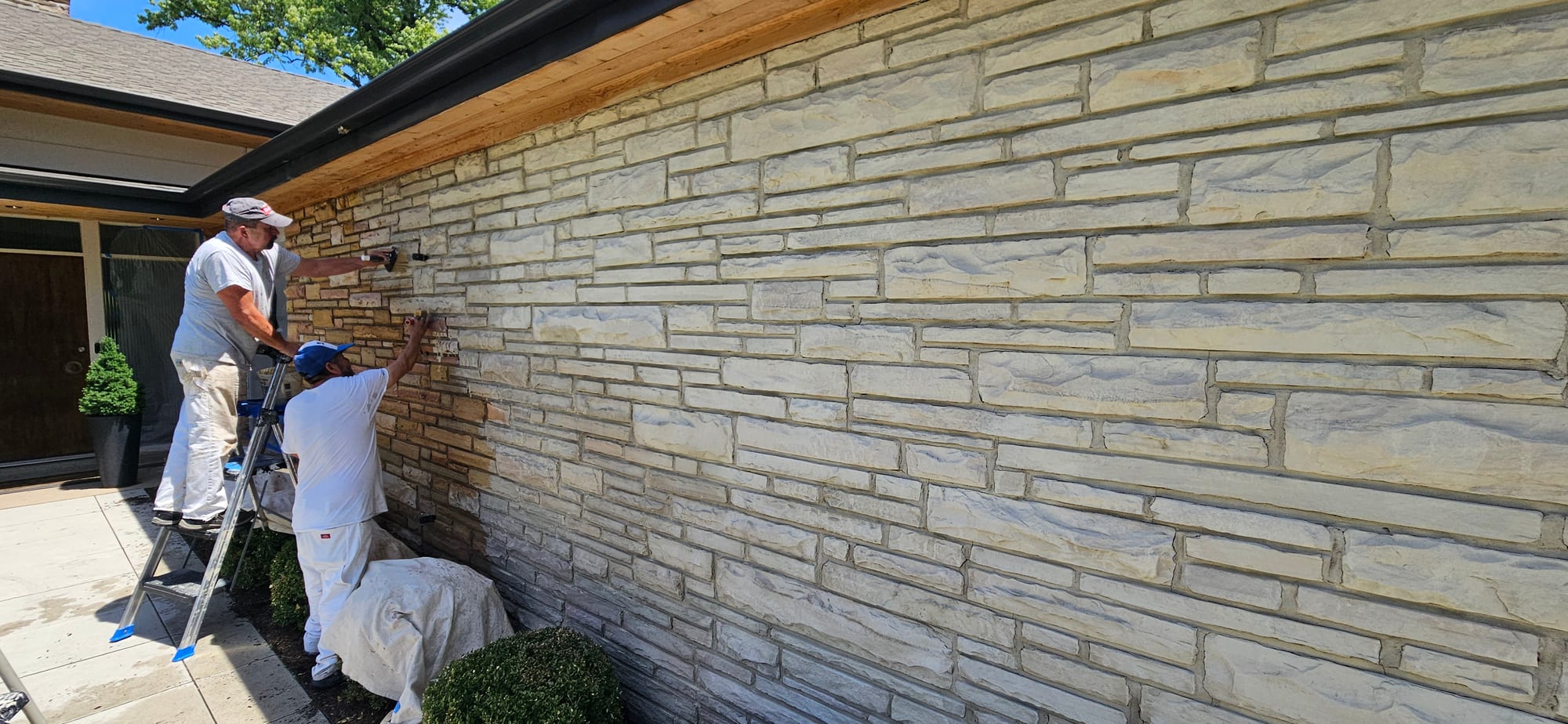
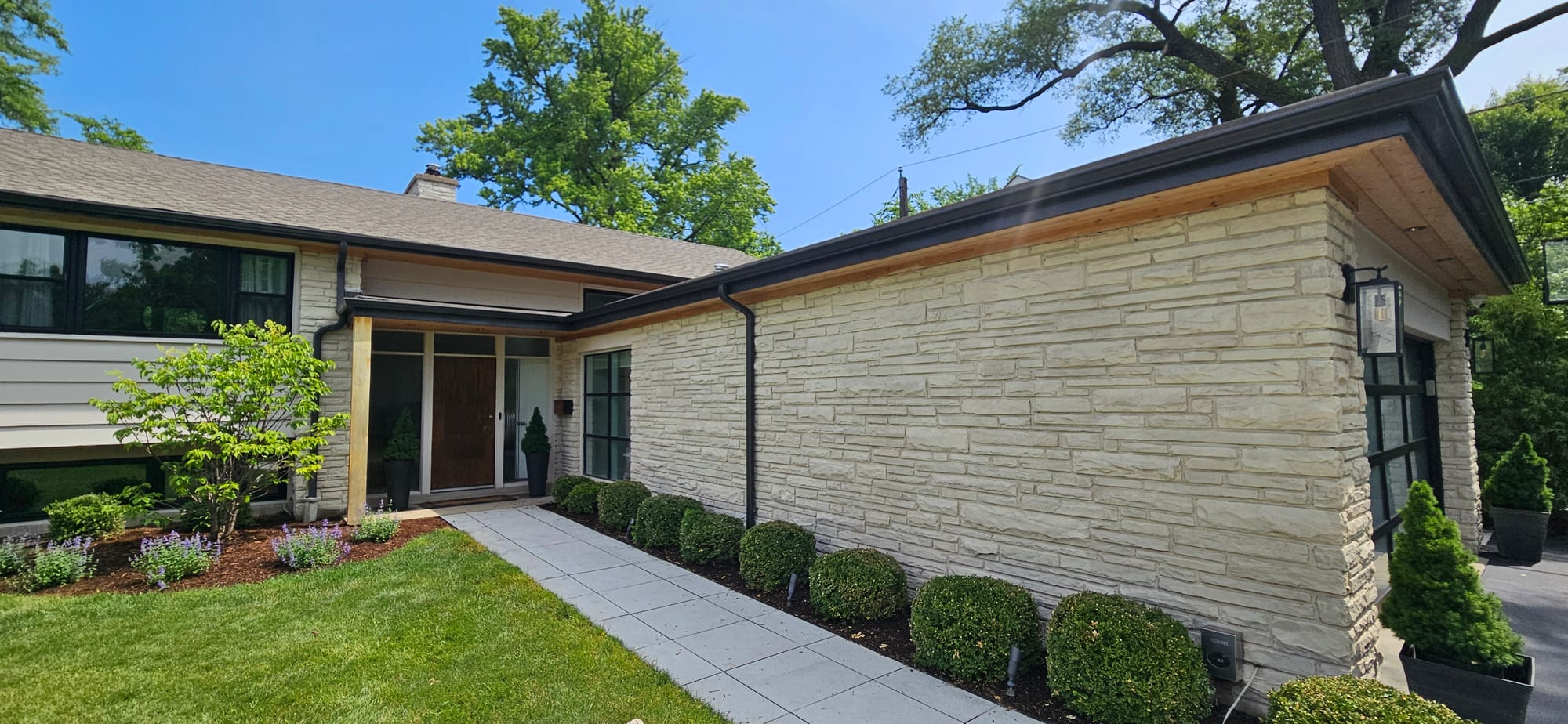
The mineral finish works on stone veneer too, not just brick.
Velatura Mineralwash, Interior Accent Wall
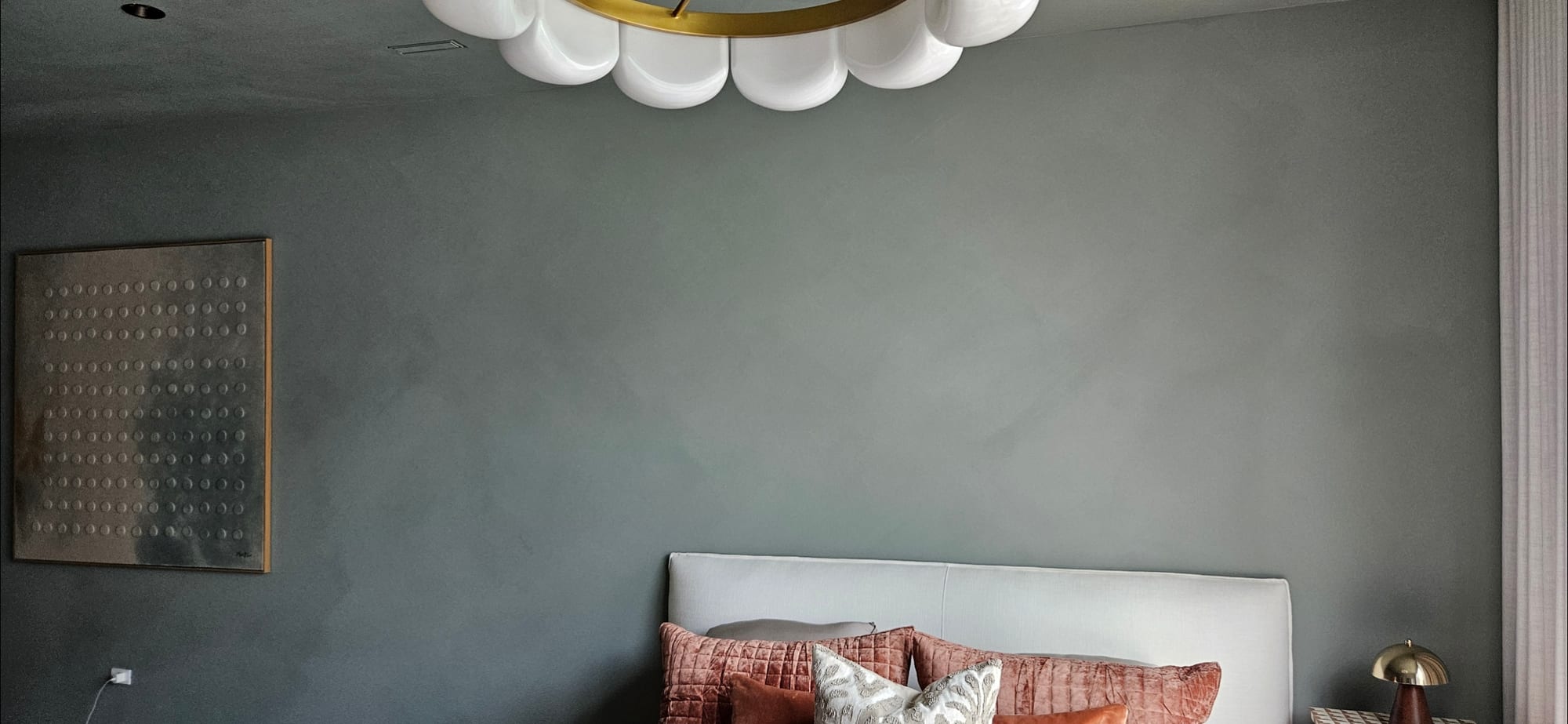
Limewash isn't just an exterior product — this bedroom accent wall carries the same soft, layered mineral texture indoors.
Want to see more finished projects? Browse our limewash and mineral coating gallery.
Ready to See It on Your Home?
The most common thing we hear after a limewash job is some version of "I should have done this five years ago." That orange brick that felt like a problem turns out to have been a feature waiting to be uncovered.
Z&Z Painting offers free consultations where we'll walk your exterior, assess your brick condition, show you coverage options in person, and give you a real number — not a range from a national calculator. Get a free estimate or call us at (630) 802-4302. We'll tell you exactly what your brick needs and what the finished result will look like before any work starts.